

The Screen-Time Dilemma: How to Build Healthy Digital Habits in Teens and Pre-Teens
November 25, 2026 2026-11-25 12:12The Screen-Time Dilemma: How to Build Healthy Digital Habits in Teens and Pre-Teens
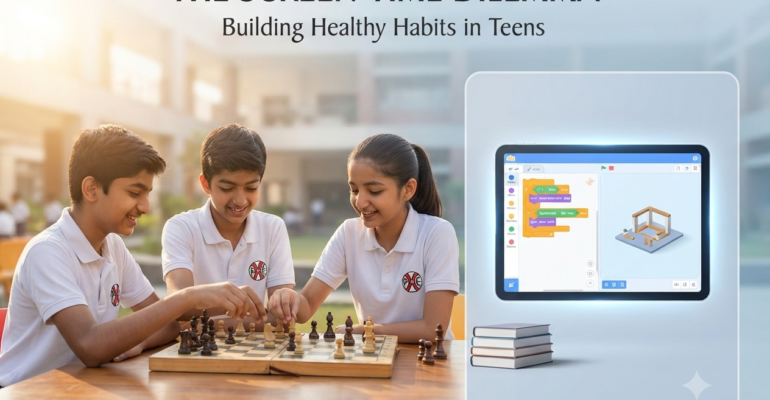
Walk into almost any living room across Indore on a weekday evening, and you will likely witness a familiar scene: a teenager absorbed in a smartphone, a pre-teen toggling between a tablet and a gaming console, and a parent quietly wondering whether this daily digital immersion is helping or hindering their child’s future.
Technology is no longer an optional accessory to modern schooling. From interactive research assignments to global collaborative projects, digital fluency is essential. Yet, for families evaluating the list of ICSE schools in Indore, a pressing question repeatedly surfaces during admissions consultations: How do we raise curious, intellectually resilient young people who command technology rather than being commanded by it?
The Reality of Adolescent Screen Exposure: What Verified Research Reveals
To address digital habits constructively, parents and educators must first look beyond guesswork and examine empirical evidence. According to research published in the International Journal of Indian Psychology, Indian adolescents spend an average of four to five hours per day on digital screens across smartphones, tablets, television, and gaming platforms more than double the two-hour daily recreational limit recommended by pediatricians and psychologists.
Equally telling is a clinical study published in the International Journal of Contemporary Pediatrics, which examined early adolescent school children in India and recorded a mean daily screen exposure of 3 hours and 35 minutes. The findings highlighted clear correlations between unchecked screen habits and student wellbeing:
International Journal of Contemporary Pediatrics
- Academic Impact: Students averaging under three hours of daily screen use demonstrated markedly stronger academic consistency, whereas progressively higher screen durations correlated with declining classroom attentiveness.
International Journal of Contemporary Pediatrics - Physical Strain: Roughly 27% of surveyed students experienced dry-eye symptoms, while 11% showed early indicators of sedentary lifestyle challenges and 10% reported frequent headaches.
International Journal of Contemporary Pediatrics - Sleep Disruption: Peer-reviewed research indexed by the National Center for Biotechnology Information (NCBI) confirms a statistically significant association between excess screen exposure and delayed weekday bedtimes among secondary school learners directly impairing memory consolidation and emotional regulation the following morning.
PMC – NIH
Key Insight for Parents: The core challenge is rarely the screen itself; it is the opportunity cost. Every hour spent in passive, algorithmic scrolling displaces outdoor sport, deep reading, face-to-face conversation, or restorative sleep.
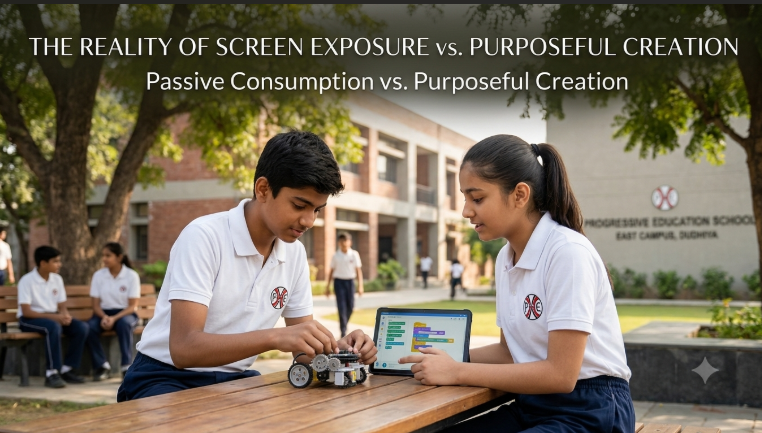
Passive Consumption vs. Purposeful Creation
In a rigorous academic environment particularly within the analytical, application-oriented framework of the Council for the Indian School Certificate Examinations (CISCE)no t all screen time carries the same cognitive weight.
When parents search online for top ICSE schools near me, they are often seeking institutions that distinguish between passive consumption and active creation. Passive screen time—endless short-form videos, mindless feed refreshing, or repetitive mobile gaming—overstimulates the brain’s reward pathways while requiring minimal critical thought. Over time, this erodes a pre-teen’s stamina for sustained reading and analytical problem-solving.
Conversely, active digital engagement transforms a device into a workbench. Coding an application, analysing environmental datasets, editing a documentary, or researching a debate motion demands focus, synthesis, and intellectual discipline. Leading ICSE schools recognise that banning technology outright leaves adolescents unprepared for university and modern careers, while unrestricted access leaves them vulnerable to distraction. The answer lies in structured digital stewardship.
Five Practical Strategies to Build Healthy Digital Habits at Home
Sustainable change rarely comes from sudden confiscation of devices, which often triggers secrecy and conflict. Instead, families can cultivate lasting self-regulation through five deliberate practices:
- Establish Device-Free Anchors in the Daily Routine Designate non-negotiable offline zones and hours. Dinner tables, family drives, and the 60 minutes immediately preceding bedtime should remain completely screen-free. Removing smartphones from bedrooms overnight protects sleep architecture and removes the temptation of late-night notifications.
- Replace “Screen Policing” with Collaborative Agreements Pre-teens and teenagers respond far better to rules they help co-author. Sit down together at the start of each term to agree upon weekday recreational limits, homework priorities, and weekend flexibility. When adolescents feel respected as emerging adults, accountability improves dramatically.
- Introduce a “Create Before You Consume” Rule Before unlocking recreational entertainment, encourage your child to spend 30 to 45 minutes on an offline or creative pursuit—whether sketching, playing an instrument, reading a physical novel, or practising a sport on the field.
- Model Mindful Digital Boundaries as Parents Children mirror adult behaviour far more closely than adult advice. When parents put aside work emails during conversations and prioritise uninterrupted family time, teenagers internalise that real-world presence matters more than digital alerts.
- Partner with a School That Values Experiential Balance Home routines thrive when reinforced during the school day. A genuinely holistic institution balances smart-classroom innovation with expansive green campuses, laboratory experimentation, performing arts, and structured physical education.
What Parents in Indore Say: Real Experiences from Our Community
When families evaluate the best school in Indore, academic credentials are only part of the equation; seeing tangible shifts in a child’s daily habits builds lasting trust.
“Before moving to Indore, our 13-year-old son spent nearly four hours every evening glued to his tablet. Within one term at Progressive Education School, his routine changed organically. Between inter-house debates, athletics on the East Campus grounds, and hands-on ICSE science projects, he comes home genuinely energized and far less interested in screens.”
— Dr. Ananya & Vikramaditya Kulkarni, Parents of Grade 8 & Grade 5 Students, Indore
“As working parents, we struggled to monitor screen time without constant arguments. What stood out when we researched ICSE schools near me with fees structure was Progressive’s transparent, holistic philosophy. Their counsellors and teachers actively guide students on digital ethics and focus, giving us real peace of mind.”
— Meenakshi Sharma, Parent of a Grade 10 Student, Annapurna Road, Indore
Choosing an Environment Where Young Minds Flourish Offline and Online
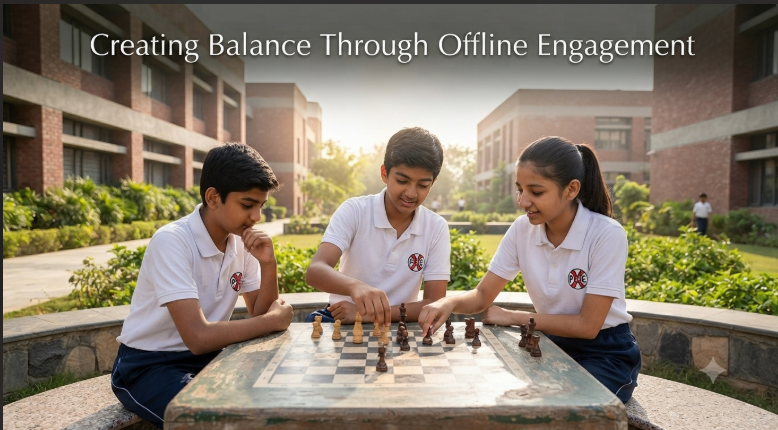
Ultimately, helping pre-teens and teenagers master their digital lives requires an ecosystem that makes the physical world just as compelling as the virtual one. Across our 11-acre elevated East Campus on Nemawar Road and our 5-acre West Campus in Annapurna, learning is intentionally designed around curiosity, outdoor exploration, and human connection.
If you are currently comparing the best ICSE schools in Indore for your child’s upcoming academic journey, we invite you to look beyond brochures and experience how a balanced, student-centric philosophy works in practice. Explore our campuses, speak with our faculty, and discover how Progressive Education School empowers learners to thrive with confidence, character, and clarity in a connected world.
Frequently Asked Questions (FAQs)
1. How many hours of recreational screen time is healthy for pre-teens and teenagers?
Pediatric and psychological guidelines including recommendations referenced by the Indian Academy of Pediatrics and child mental health specialists—advise limiting non-academic, recreational screen exposure to no more than 1 to 2 hours per day for school-aged children and adolescents, alongside at least 60 minutes of daily physical activity.
2. How do top ICSE schools in Indore integrate technology without encouraging screen dependency?
Leading CISCE-affiliated institutions treat technology as a purposeful learning tool rather than a passive distraction. Classroom digital resources are paired with experiential laboratory work, physical library research, outdoor sports, and structured critical-thinking exercises so students learn how to think independently.
3. What are the early warning signs that a teenager’s screen habits are becoming unhealthy?
Common indicators include irritability when asked to log off, declining concentration during homework, delayed sleep schedules on school nights, withdrawal from outdoor hobbies or family meals, and physical complaints such as eye strain or frequent headaches.
4. Where can parents check admissions details and fee structures for Progressive Education School in Indore?
Parents comparing ICSE schools in Indore can visit the official website at progressiveeducationschool.com or contact the admissions offices at the East Campus (Nemawar Road, Dudhiya) and West Campus (Dashera Maidan, Annapurna) for current session fee schedules and campus tour appointments.
Related Posts