
AI Can Think. Can Children Adapt? Building Emotional Resilience for the Future
October 7, 2026 2026-10-07 13:18AI Can Think. Can Children Adapt? Building Emotional Resilience for the Future
Point of View (POV) Summary
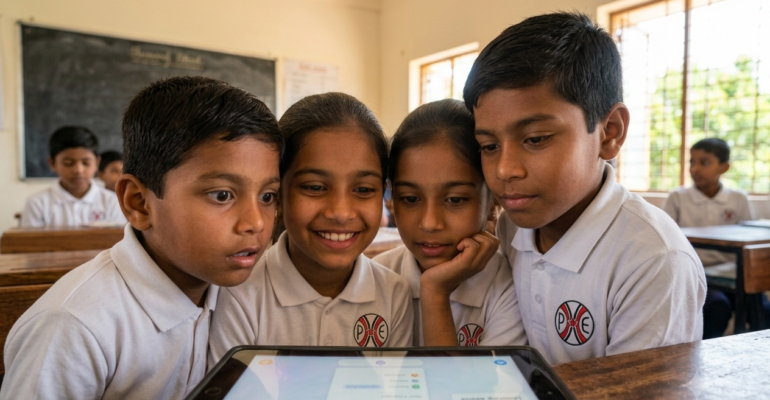
The Educator’s Perspective: As artificial intelligence handles technical problem-solving and knowledge retrieval, human uniqueness will lie entirely in emotional intelligence, ethical reasoning, and resilience. To ensure our children thrive alongside smart algorithms rather than feel displaced by them, primary education must evolve. The goal of modern schooling is no longer to teach children what to compute, but how to feel grounded, adapt under uncertainty, and collaborate empathetically.
1. The Technological Shift: Why Intelligence Is No Longer Enough
Artificial intelligence models can draft complex code, analyze financial markets, and summarize medical literature in seconds. For decades, traditional educational models measured student capability primarily through memory retention and analytical processing. Today, algorithms outpace human capability in those exact areas.
This technological pivot requires a fundamental shift in early childhood development. When machine intelligence handles cognitive computation, a child’s true competitive advantage becomes human adaptability—specifically emotional resilience, grit, self-awareness, and relational intelligence.
Leading educational institutions across Madhya Pradesh are updating their pedagogical frameworks to reflect this reality. When exploring the List of ICSE schools in indore, parents increasingly look for campuses that emphasize social-emotional learning (SEL) alongside structured academic rigor.
2. Verified Data: The Growing Need for Human-Centric Skills
Global workforce and child development research emphasizes that emotional stability is becoming the core anchor of future readiness.
| Research Entity | Key Insight & Metric | Educational Implication |
| World Economic Forum (Future of Jobs Report) | 60% of core skills needed by 2027 center around resilience, flexibility, agility, and lifelong learning. | Technical mastery alone is insufficient without adaptability. |
| UNESCO (Education & SEL Benchmark) | Social-emotional learning interventions yield a 11-percentile point gain in academic achievement. | Emotional well-being directly boosts intellectual output. |
| McKinsey Global Institute | Demand for higher cognitive skills, social-emotional skills, and technological literacy will grow by over 24% through 2030. | Schools must balance technological fluency with human empathy. |
According to insights published by the World Economic Forum, resilience, curiosity, and emotional flexibility consistently rank among the top non-negotiable skills for future generations.
3. What Emotional Resilience Looks Like in a Modern Classroom
Building emotional resilience does not mean protecting children from difficulty or stress; it means providing a safe, structured framework where they learn to navigate challenges, bounce back from setbacks, and adapt to changing environments.
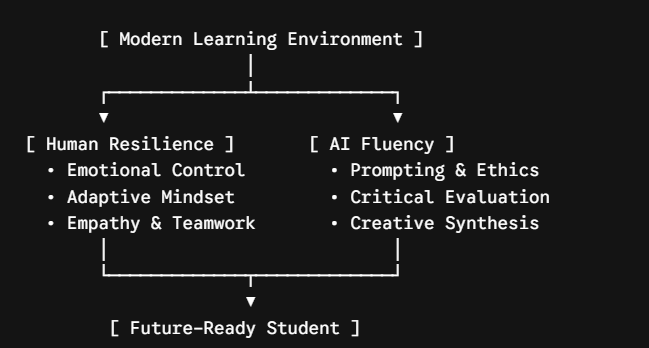
In the classroom, this dual approach translates into actionable routines:
- Reframing Mistakes as Growth Data: When students write code or solve complex mathematical problems, unexpected errors are treated as iterative feedback rather than personal failure.
- Encouraging Deep Collaboration: While automated tools generate quick answers, human students must negotiate, lead, and empathize within peer groups.
- Cultivating Mindful Reflection: Incorporating structured reflection periods allows students to process emotions, manage stress, and recharge during intense academic modules.
Institutions counted among the Top 10 icse schools in indore actively integrate these routines into daily schedules, ensuring children develop both mental stamina and moral grounding.
4. Why Curriculum Design Matters: The ICSE Framework
Curriculum choice plays a critical role in shaping a child’s analytical and emotional mindset. Among different boards, icse schools are recognized for their comprehensive, application-focused syllabus structure.
Practical Application Over Memory
The ICSE curriculum requires students to explain why and how concepts work, encouraging active exploration rather than mechanical memorization.
Broad Humanities & Arts Exposure
By placing equal emphasis on literature, arts, social sciences, and STEM fields, students develop balanced perspectives and strong communication skills.
Structured Internal Assessments
Project work and continuous internal evaluations encourage students to organize their time, manage deadline anxiety, and build consistent working habits.
Parents seeking the best school in indore icse often select this board because its depth prepares children to evaluate AI outputs critically rather than accept them passively.
5. Parent Action Plan: How to Build Resilience at Home
While schools provide structured guidance, emotional resilience begins in the home environment. Here is an actionable guide for parents navigating the digital age with their children:
- Embrace Safe Failure: Avoid intervening immediately when your child encounters an academic or creative block. Prompt them with questions like: “What else can we try?”
- Set Clear Digital Boundaries: Encourage offline activities—such as reading physical books, engaging in sports, and joining group arts—to ensure online time is balanced with real-world interactions.
- Model Adaptive Behavior: Share how you manage unexpected stress or workplace changes in simple terms, demonstrating emotional regulation in everyday situations.
- Select the Right Academic Environment: Ensure your child’s institution aligns with your family’s core values. Evaluating the Top icse schools in Indore can help you find a campus that prioritizes both emotional stability and academic excellence.
By pairing home support with a strong school environment, children grow into adaptable, confident individuals ready for an evolving world. Whether you are reviewing options among the Best icse schools in indore or choosing the best school in indore, prioritizing emotional resilience ensures your child is equipped for long-term success.
Frequently Asked Questions
Q1: Why is emotional resilience more important now that AI can perform complex tasks?
A: As artificial intelligence automates routine analysis, data processing, and technical tasks, uniquely human qualities—such as emotional regulation, creative synthesis, ethical decision-making, and adaptability—become essential. Emotional resilience allows children to thrive in rapidly changing environments without feeling overwhelmed.
Q2: How do ICSE schools in Indore balance AI integration with emotional well-being?
A: Leading icse schools integrate technology as a supporting tool for research and critical thinking, while prioritizing human interaction, group projects, physical education, and social-emotional learning (SEL) programs to maintain balanced mental health.
Q3: Which factors should I consider when selecting from the List of ICSE schools in Indore?
A: When evaluating schools, look beyond basic academic metrics. Consider student-to-teacher ratios, campus safety standards, pastoral care programs, sports and arts infrastructure, and how effectively the school nurtures life skills alongside curriculum standards.
Related Posts